The Anatomy of Europe’s Most Celebrated Asphalt
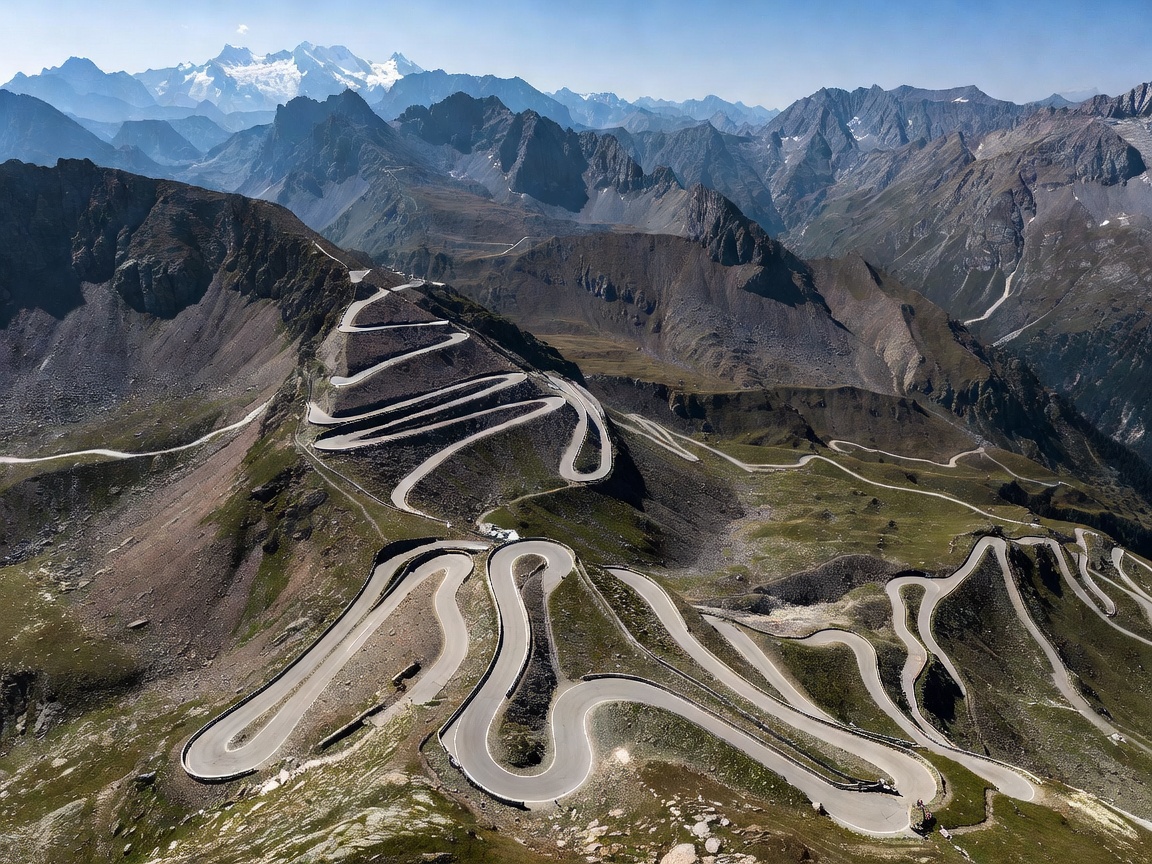
Passo dello Stelvio (Stilfser Joch in German) is not merely an alpine road; it is an engineering cathedral constructed between 1820 and 1825 under the direction of Carlo Donegani for the Austrian Empire. Linking the Valtellina with the Venosta Valley over the Ortler ridge, the pass retains its initial alignment almost unaltered, protected by drystone masonry and heavy timber barriers.
For drivers pilot-testing sports machines or dynamic grand tourers, the Stelvio is both intoxicating and unforgiving. Ascending from the eastern ramp starting at Prato allo Stelvio (915m elevation), you face an elevation gain of over 1,840 vertical meters condensed into just 24 kilometers.
Critical Strategy: The 06:15 AM Departure Rule
Between 09:30 and 16:30 throughout July and August, Stelvio becomes clogged with motorhomes, tourist buses, and thousands of cyclists. To experience the fluid rhythm of the 48 switchbacks, depart Prato no later than 06:30 AM when tarmac temperatures are crisp and mechanical traffic is negligible.
Ramp-by-Ramp Driving Telemetry
1. The Lower Forest Sector (Hairpins 48 to 32)
Beginning past Gomagoi and Trafoi, the road winds through dense subalpine spruce. Here, the gradient remains manageable at 6% to 8%, but sightlines are limited by tree canopies and stone parapets. Keep transmission in 2nd and 3rd gear, listening carefully for oncoming engines at corner entries.
2. The Open Colosseum Wall (Hairpins 31 to 1)
Breaking past the timberline at 2,150 meters, the entire vertical face reveals itself in breathtaking scale. Hairpin turns are numbered sequentially with stone markers counting down to 1 at the summit pass. Here the gradient spikes to 12.8%. Turn radii narrow drastically; long-wheelbase vehicles must swing wide to clear the inner stone kerbs without scraping chassis skirts.
Descent Logistics: Bormio vs. Umbrail Pass
Once reaching the bustling summit at 2,757m with its classic bratwurst kiosks and Tibetan huts, drivers have two distinct exit trajectories:
- Bormio Descent (SS38 West): 39 switchbacks leading into Lombardy. Faster, flowing segments through narrow avalanche galleries and rock tunnels.
- Umbrail Pass (Pass Umbrail): Diverging just 3km below the summit on the western shoulder, dropping directly into Santa Maria Val Müstair, Switzerland. Flawless Swiss tarmac and substantially lower traffic density.
Vehicle Setup & Safety Protocols
Verify tire cold pressures prior to departure from Prato; elevation climb creates a 0.2 to 0.3 bar pressure variation coupled with thermal friction. Keep traction control in sports or dynamic mode rather than fully deactivated, as morning dew on high switchbacks creates slick patches across apex stone joints.